
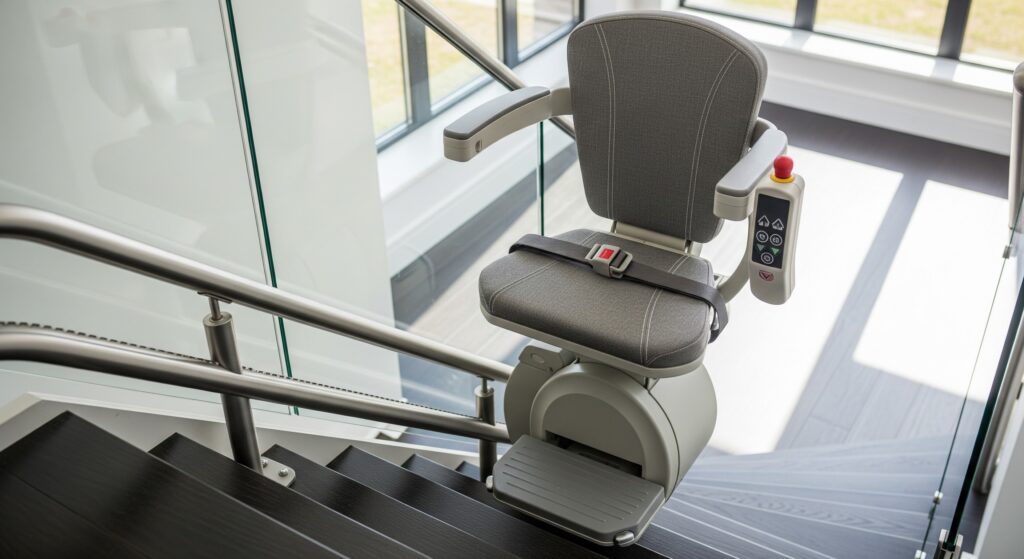
Stairlifts are a proven solution for improving safety and accessibility, but not all stairlifts are designed for the same environments. One of the most common questions homeowners face is whether they need an indoor or outdoor stairlift. While both serve the same purpose—safe movement on stairs—their construction, maintenance needs, and suitability differ significantly.
Understanding these differences is essential to choosing a system that works reliably, lasts longer, and meets your daily mobility needs.
What Is an Indoor Stairlift?
Indoor stairlifts are designed specifically for use inside the home. They are typically installed on staircases that connect living spaces such as bedrooms, bathrooms, basements, or garages.
Key Features of Indoor Stairlifts
- Designed for climate-controlled environments
- Smooth, quiet operation
- Upholstered seats and armrests for comfort
- Compact rail systems that minimize impact on stairway space
- Foldable seats, arms, and footrests to keep stairs accessible to others
Indoor stairlifts are custom-fitted to straight or curved staircases and are commonly used as part of an aging-in-place plan.
What Is an Outdoor Stairlift?
Outdoor stairlifts are built to withstand environmental exposure. They are commonly installed on:
- Front or back porch steps
- Deck staircases
- Garage-to-house exterior stairs
- Garden or yard access points
These stairlifts allow users to enter or exit their home safely when stairs are located outside.
Key Features of Outdoor Stairlifts
- Weather-resistant materials and coatings
- Sealed electrical components
- UV-resistant seating
- Protective covers to shield from rain, snow, and debris
- Enhanced traction and corrosion resistance
Outdoor stairlifts are engineered for durability, not aesthetics, and must perform reliably in changing weather conditions.
Practical Differences Between Indoor and Outdoor Stairlifts
Environmental Exposure
Indoor stairlifts operate in stable conditions with limited temperature changes and no direct exposure to moisture. Outdoor stairlifts must function in heat, cold, rain, snow, and humidity, which requires stronger materials and protective design.
Maintenance Requirements
Indoor stairlifts generally require less maintenance. Routine servicing focuses on mechanical checks, battery performance, and safety sensors.
Outdoor stairlifts need more frequent inspections to ensure:
- Seals remain intact
- Tracks are free of debris
- Weather-related wear is addressed early
Ignoring maintenance on an outdoor system can significantly shorten its lifespan.
Durability and Lifespan
Because indoor stairlifts face fewer environmental stressors, they often experience less wear over time. Outdoor stairlifts are built tougher but naturally face more strain, making professional installation and ongoing service especially important.
Cost Considerations
Outdoor stairlifts often cost more due to:
- Specialized weatherproof materials
- Additional protective features
- Installation considerations related to exposure and drainage
Choosing an indoor stairlift for an outdoor space is not recommended, as it may lead to frequent breakdowns and safety risks.
Climate Matters More Than You Think
Local climate plays a major role in determining whether an outdoor stairlift is necessary and how it should be configured. Homes in areas with snow, heavy rain, or extreme temperatures require systems specifically rated for those conditions.
This is why professional evaluation is critical. A system that works well in one region may not perform reliably in another.
Can One Home Need Both?
In some cases, yes. Homes with exterior entry stairs and interior multi-level layouts may benefit from both indoor and outdoor stairlifts. Each system serves a distinct purpose and must be selected independently to ensure safety and durability.
Why Professional Assessment Is Essential
Choosing between an indoor and outdoor stairlift is not just about where the stairs are located. Factors such as:
- Staircase structure
- Daily usage patterns
- Exposure to weather
- User mobility and transfer ability
- Long-term living plans
All influence the correct solution.
At One Step Mobility, stairlift recommendations are based on real use scenarios, safety standards, and the long-term reliability of the system—not assumptions.
Make the Right Choice Before Stairs Become a Risk
Delaying the decision often leads to rushed installations after a fall or injury. Addressing stair safety early allows for better planning, fewer limitations, and more dependable results.
Whether your stairs are inside your home, outside your entryway, or both, the right stairlift can dramatically improve safety and independence.
Get Expert Guidance You Can Trust
If you are unsure which type of stairlift your home needs, a professional evaluation can provide clear answers and realistic options.